800-949-9902
Toll Free- 925-689-9090
International
Some wire connections need to stay locked in place. No slipping off, no loose fit, no wondering if it's making good contact. That's what ring terminals are for.
You'll see them on battery connections, ground wires, fuse blocks, switches, and all kinds of equipment. If a wire needs to bolt down and stay there, this is usually the right connector for the job.
Small part, but it does a lot of work.
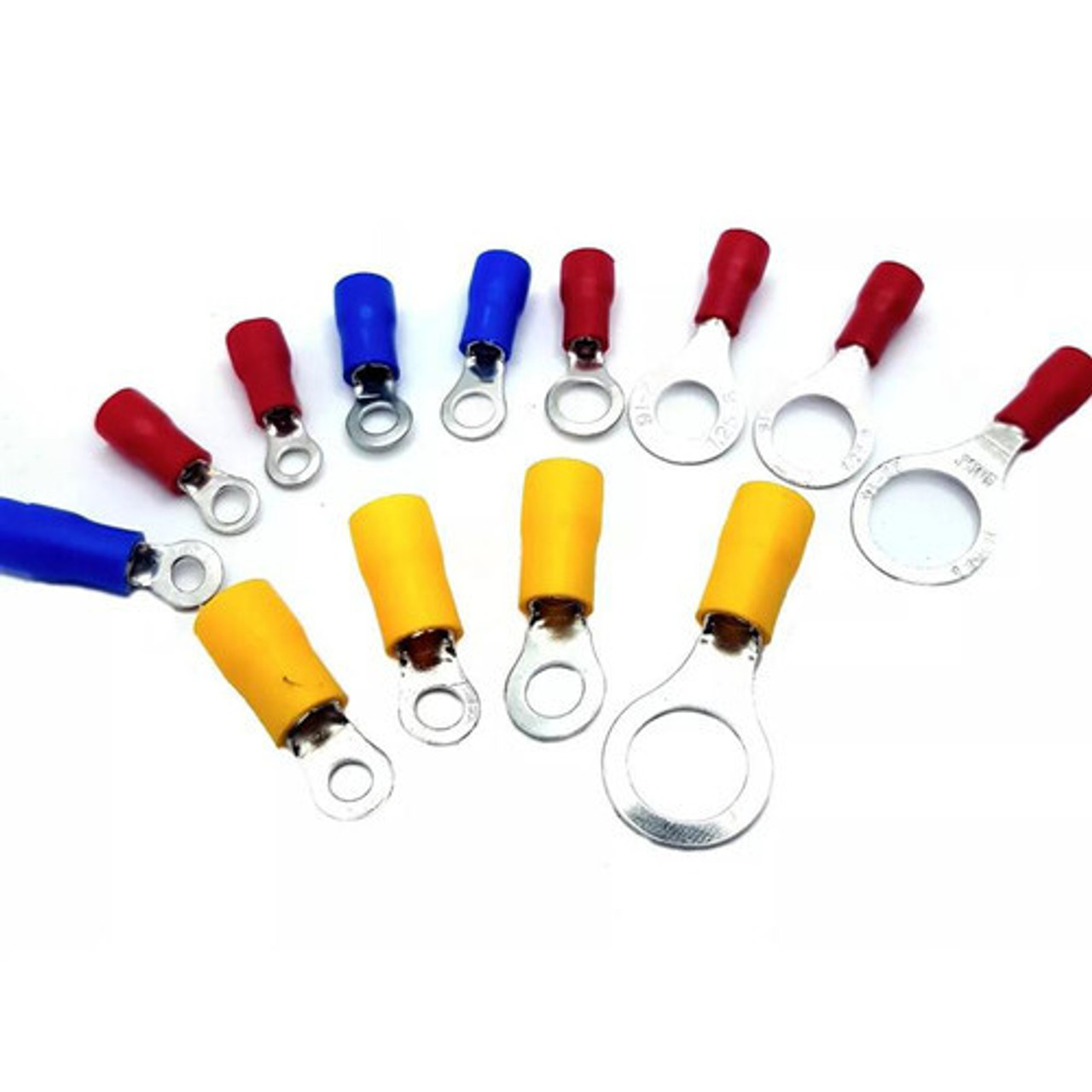
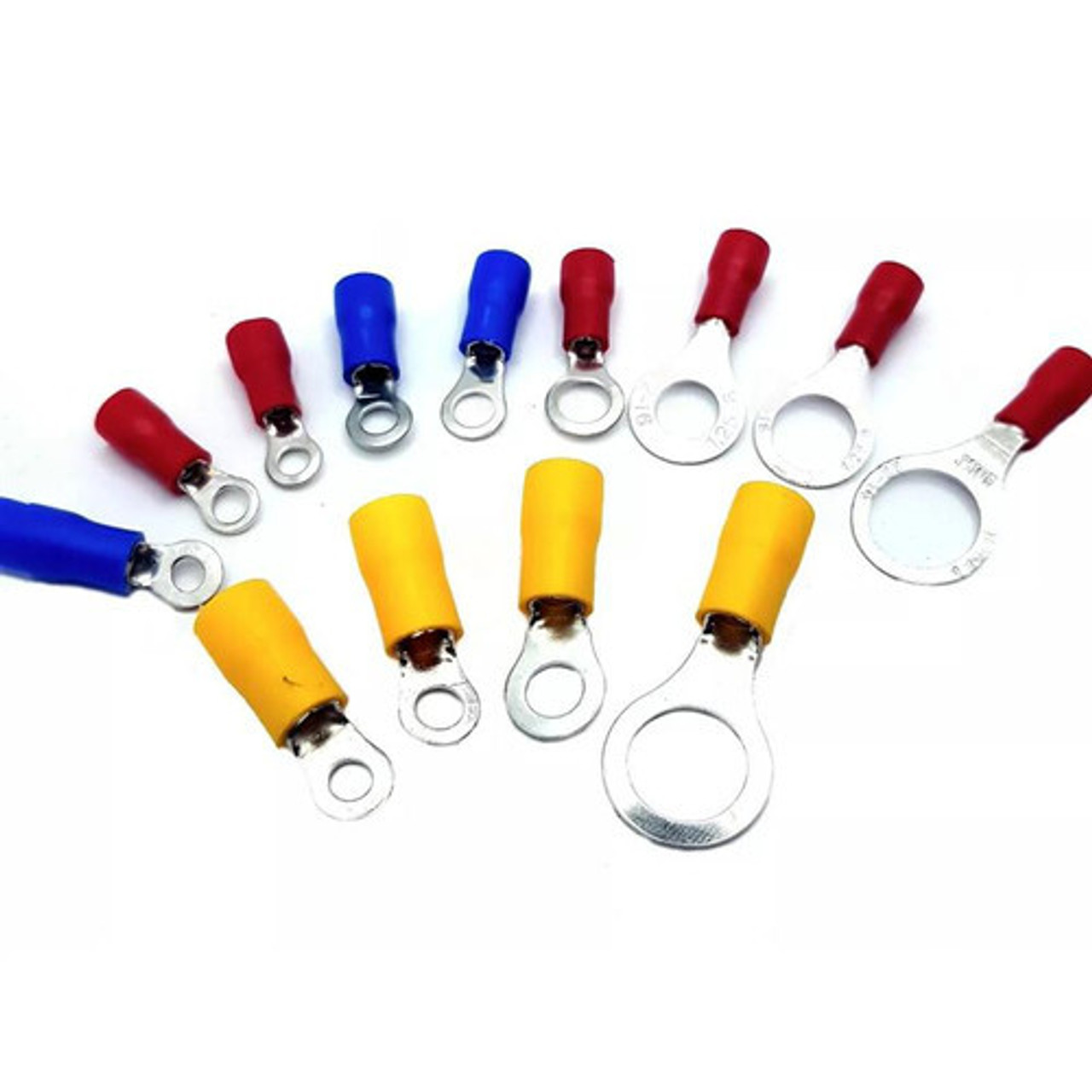
A ring terminal has two ends.
One side is the barrel where the wire gets crimped in place.
The other side is the ring that goes over a stud, screw, or bolt.
Once it's tightened down, the wire stays secure until you remove the hardware. That's why they're used so often in vehicles, trailers, equipment, and general electrical work.
Anywhere a wire needs a solid mounting point.
If the wire needs to be fastened down instead of plugged in, ring terminals are usually the answer.
This is where people usually get it wrong.
You need the correct wire size and the correct hole size.
The barrel has to match your wire gauge so it crimps tight.
The ring opening has to fit the stud or bolt you're attaching it to.
Too small, it won't fit. Too big, it can move around.
If the connection is exposed, insulated terminals can help protect it.
If it's a heavier power connection, go with a stronger copper terminal built for higher load.
Most failures come from bad contact, not the terminal itself.
If it's a ground wire, make sure the metal surface is clean before installing. That alone solves a lot of issues.
Cheap ring terminals bend easily, crack, or don't crimp well.
Better ones hold shape, grip the wire properly, and carry current without becoming the weak point in the system.
If it's tied to power or grounding, use something you trust.
Match the wire gauge first, then match the hole size to the stud or bolt.
Yes. They're commonly used for battery cables and accessory power leads.
Yes. You'll get a tighter, more reliable connection than using makeshift tools.
Ring terminals or eyelet terminals, are available for a wide range of wire and stud sizes. Used for termination of wires, our ring terminals are made from pure electrolytic copper and Grade A crimping vinyl.
Use our ring terminals where an insulated barrel is necessary and desirable. Our terminal consists of a butted seam part with flared, rigid molded polyvinyl chloride. The ring terminal is securely attached and funneled for easy wire entry.
Our ring terminals provide a variety of design features assuring consistently effective, reliable performance and easy installation.
 Made in the USA

Top Trends in Automotive Wiring Accessories for 2025: Essential Insights & Picks Automotive wiring a
Read More

Heat shrink tubing is a small but powerful component in any electrical or automotive project. It ins
Read More

How to Choose the Right Electrical Connector in 2025: Expert Tips & Trend Choosing the right electr
Read More